
Getting started
See the shapes, then build your own.
Prime shapes are 3D, six-sided rectangular blocks made of unit cubes. Below are quick examples and what to look for in the explorer.
Prime numbers
Primes are towers.
A number is prime if and only if it can only make a 1×1×N tower. No other factors, no other shapes.
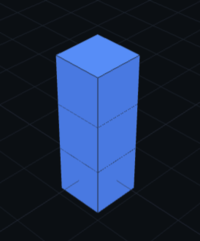
3 → 1×1×3
Three cubes stacked straight up.
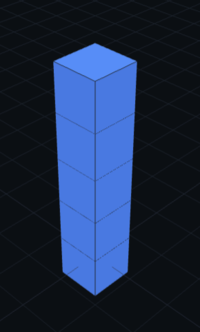
5 → 1×1×5
Five-cube tower—only one way to arrange it.
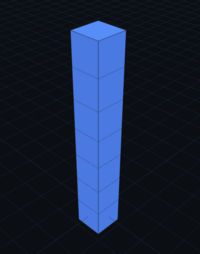
7 → 1×1×7
Seven cubes tall, still a single column.
11 → 1×1×11
Eleven stacked cubes: primes always stay towers.
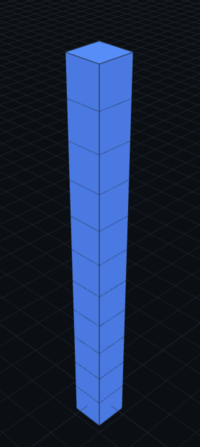
Tip: In the explorer, type N = 3, 5, 7, or 11. You’ll only see a tower as the prime shape.
Perfect squares
Squares often form flat plates.
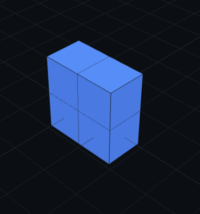
When factors pair up (like 2×2 or 3×3), squares flatten into one-layer plates; for other numbers, the square may still have thickness.
4 → 2×2×1
A square plate, one layer thick.
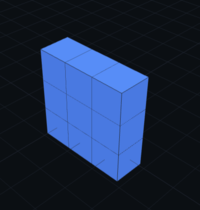
9 → 3×3×1
A larger square plate—still one layer tall, very surface-efficient.
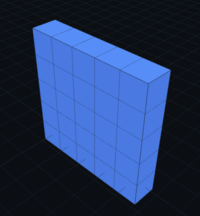
25 → 5×5×1
Bigger square plate—still just one layer tall.
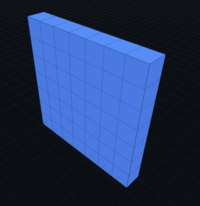
49 → 7×7×1
Large square plate—very efficient surface area.
Perfect cubes
Cubes are perfectly balanced.
8 → 2×2×2
Small, perfectly balanced cube.

27 → 3×3×3
A larger cube—surface-to-volume ratio improves.
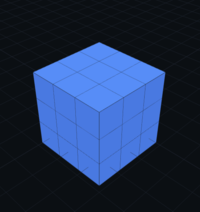
64 → 4×4×4
Even larger cube, most efficient shape for this volume.
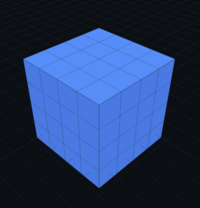
125 → 5×5×5
Larger cube—great example of how surface area grows slower than volume.
Composite shapes
Balanced prisms beat tall towers.
12 → 3×2×2
Short brick; surface area drops vs 1×1×12.
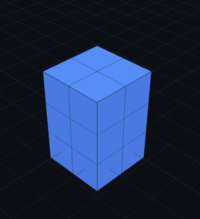
36 → 3×3×4
Compact rectangular prism; beats any tower for surface area.
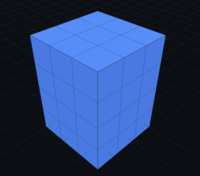
10 → 5×1×2
Flatter than a 1×1×10 tower—surface area shrinks.
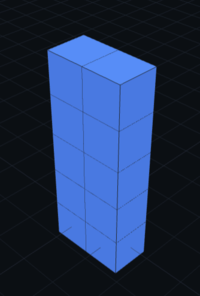
6 → 3×2×1
Tiny brick; good starter comparison vs 1×1×6.
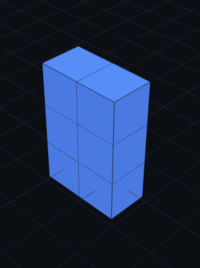
When primes fuse
Four primes won't fit in three dimensions.
A number with three prime factors gets one prime per edge — 30 = 2×3×5, every edge prime. But give a number four prime factors and there's no room: two primes must fuse into one composite edge. It happens every time, and it's provable with nothing but the pigeonhole principle.
210 = 2·3·5·7 → 5×6×7
The first fused number: 2 and 3 merge into the edge 6. The star example.
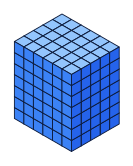
16 = 2·2·2·2 → 2×2×4
Even a prime power fuses: two of the 2s pair up into a 4.
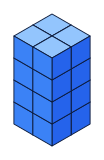
720 = 2⁴·3²·5 → 8×9×10
Six primes dealt into three consecutive edges. Balance always wins.
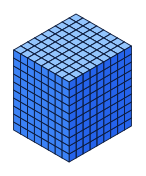
Challenge: exactly one edge goes composite at four prime factors — never two. Can you figure out why? Hint in Advanced Study →
What to notice in the explorer
1) Dimensions multiply to N
If the product doesn’t match, your shape isn’t valid yet.
2) Surface area races
Try a tower vs a compact prism; watch surface area drop as dimensions balance.
3) Rotate & zoom
Drag to rotate, scroll/pinch to zoom. Seeing edges and faces helps kids reason about efficiency.
Want live visuals? Jump into the explorer and try the numbers above.
Ready to build?